Read Social Class and Marxism: Defences and Challenges - Neville Kirk file in ePub
Related searches:
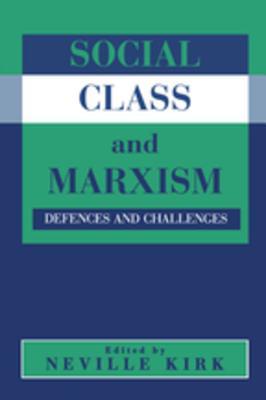
Social Class and Marxism: Defences and Challenges - 1st Edition
marxism and the individual - Communist Party of India (Marxist)
Inequality and Social Structure: A Comparison of Marx and - JSTOR
Rational Choice Marxism and Social Class Boundaries - COLIN
Social Class and Marxism Taylor & Francis Group
Social Class And Marxism Defences And Challenges 1996 Edition
Marxism and Social Class SpringerLink
Marxism And Social Class Analysis - 2351 Words Cram
MARXISM AND CLASS: SOME DEFINITIONS
Education, Social Class and Marxist Theory SpringerLink
Sociology-theory and methods-Marxism Flashcards by Holly
Quotes By Marx and on Marxism - University of New Mexico
Education, Social Class and Marxist Theory Abstract
Marxist and Functionalist theories of class and inequality
Class, Politics, and Social Theory: The Possibilities in
Social Stratification and Inequality: Theories of
Social Conflict and Social Relations: The Marxism Approach
USA: Gun Control and Class Struggle - In Defence of Marxism
Conflict Theory and Deviance Sociology - Reading
Karl Marx and Fredrick Engels on Industrial Capitalism - New
Modernism and Marxism.
Social Class and Marxism by Neville Kirk Waterstones
CITIZENSHIP AND SOCIAL CLASS
MARXISM AND CLASS CONFLICT - University of Hawaii System
Social Stratification and Inequality: Theories of Stratification
Comparison of marx and weber social stratification views
Karl Marx: Marxism and Contemporary Society SchoolWorkHelper
Marxism and Contemporary Society - Earlham Sociology and
Perceiving Materiality: Balzac’s Social Realism and the
Marxism and Social Class - Education Forum
Karl Marx and Max Weber Different Views on Capitialism
Marxism Unit 7: Sociological Perspectives for Health and
Sociology: Culture and Identity. MindMeister Mind Map
Marxism and Social Movements
Understanding Marx and Marxian Class Theory - Fact / Myth
(PDF) Marxism and Realism: Theories of Social Change
In recent years historians and other social scientists have widely questioned the continued relevance of social class - as historical relationship, as sociologi.
From a marxian perspective, systems of stratification derive from the relationships of social classes to the forces of production. According to a marxian view, a class is a social group whose members share the same relationship to the forces of production.
Marxism, conflict theory, and social class marx defined class as a group of people who have the same relationship to the means of production—the facilities and resources for producing goods—such as tools, machines, and factories.
Thus, marxist feminist criticism reveals women as secondly placed in the society who should be submissive to their husbands in the society dominated by male chauvinism. Social class and economics are vividly portrayed by edith wharton’s age of innocence especially the upper class and its improper solicit coupled with debauchery.
Divisions within social classes are more important than suggested by marx as is the distinction between class and status. For some manual workers the increased complexity of their work has reduced “alienation“.
The marxist theory of class is opposed by those sociologists who explain class not in terms of� or non ownership of the means of wealth production, but in terms of prestige, and style of life. Society is said to consist of a hierarchy of non-conflicting classes, with names such as upper, middle, working and under.
Marxism is a method of socioeconomic analysis that views class relations and social conflict using a materialist interpretation of historical development and takes a dialectical view of social transformation. It originates from the works of 19th-century german philosophers karl marx and friedrich engels.
In the recent period, the so-called tea party movement has laid claim to the legacy of the american revolution. With their tri-corner hats and abstract appeals to patriotism and freedom, they have seized headlines, aided by generous coverage by the corporate media. This has led to tremendous confusion when it comes to the real class roots of this world-shaking event.
A rising social class has to exist that can move the situation on and challenge the class in power, and even then “the common ruin of the contending classes” is always a possibility. Hence, a mechanical interpretation of marx’s stress on production as the motor force of history is one-sided and wrong.
History and usage of the term early theories of class karl marx's social theory of class contemporary theories of class characteristics of the principal classes.
Marxist-leninists accept the concept of social class put forward above, but hold that a person's social class is determined not by the amount of his wealth, but by the source of his income as determined by his relation to labour and to the means of production.
Karl marx based his conflict theory on the idea that modern society has only two classes of people: the bourgeoisie and the proletariat.
For marx, the analysis of social class, class structures and changes in those structures are key to understanding capitalism and other social systems or modes of production. The history of all hitherto existing society is the history of class struggles.
Education, social class and marxist theory dave hill the history of all hitherto existing society is the history of class struggles.
In karl marx's theory of class conflict, he provided very clear definitions for these two classes. To understand marx's stance in social history, we need to look at the two groups he believed made.
In chapter 4 of the holy family (1845), marx said that capitalists and proletarians are equally alienated, but that each social class experiences alienation in a different form: the propertied class and the class of the proletariat present the same human self-estrangement.
Publishes research studying marxian discourses, including economic, cultural and social analysis and marxian class.
Karl marx was a german economist philosopher and sociologist best known for his theory on capitalism and communism. Marxism is a conflict perspective that challenged functionalism which was developed by emile durkheim and became quite instrumental in the 1940s. Marx proposed a system in his book, ‘the communist manifesto’ which gained a lot of support.
The recent attacks in colorado, connecticut, boston, and across the country have shocked everyone. As has been previously explained in the pages of socialist appeal, these repeated incidents of violence signify the decay of american capitalism. The decline of capitalism offers no future for today’s youth, only distractions, desperation, and escapism.
In recent years historians and other social scientists have widely questioned the continued relevance of social class - as historical relationship, as sociological category, as philosophical concept, and in terms of its enduring political significance. The success of the british conservative party since 1979, combined with the weaknesses and failures of the labour movement, have led historians.
One of the most powerful sociological explanations of social conflict is that of karl marx, who posited a class struggle between proletariat and bourgeoisie.
According to bendex and lipset, “a social class in marx’s terms is any aggregate of persons who perform the same function in the organization of production. ” according to marx, “class is the manifestation of economic differentiation.
Marxism believed that our society was in a state of continual conflict between the working class and upper class, this essay will assess the marxist approach on social class a theory stemmed from the works of karl marx, that believes our society to be in a state of constant struggle between the ruling class (bourgeoisie) and the working class (proletariat).
Indeed, if we look at the social classes, the evolution of governments, and the evolution of economy in history, marx the historian presents a compelling theory. Or at least ponder the image above for a second to get an idea of the multi-tiered “third estate” social class marx is talking about.
This chapter uses a marxist perspective to deal with the relationship between social class, society and education. It initially focuses on the measurement of social class, drawing on weberian ‘gradational’ and marxist ‘relational’ classifications and definitions of class.
Marx's emphasis on class conflict as constituting the dynamics of social change, his awareness that change was not random but the outcome of a conflict of interests, and his view of social relations as based on power were contributions of the first magnitude.
Karl marx defined class in terms of the extent to which a person or social group has the capacity to control the means of production. Those of the same social class have a common relationship to the means of production. Marx believed that the base of inequality among individuals in modern societies is economy (sanghara).
Conflict theory looks to social and economic factors as the causes of crime and deviance. Though marx spoke little of deviance, his ideas created the foundation for crack versus cocaine paralleled the unequal social class of resp.
To marx, a class is a group with intrinsic tendencies and interests that differ from those of other groups within society, the basis of a fundamental antagonism between such groups.
Marxism is a social, political, and economic theory originated by karl marx, which focuses on the struggle between capitalists and the working class.
Changes are due to class struggle and the working out of contradictions inherent inherent in social and political phenomena. The second element of marxism is a materialist approach to history. The development of productive forces and economic activities is central to historical change and operates through the class struggle.
If we turn from art to social theory we have to ask where marx stood in relation to the modernist capitalist production and the universality of class conflict. Sectional defence of craft rights, so it was the capitalists who playe.
(marx, engels 1978) marx is known for two major conceptions of social causation: historical materialism and class struggle. With regard to the class struggle perspective, modern research on social movements has developed some useful models (more of which below).
For marx, the analysis of social class, class structures and changes in those structures are key to understanding capitalism and other social systems or modes of production. In the communist manifestomarx and engels comment that the history of all hitherto existing society is the history of class struggles.
Against this stands marx's belief that any alternative to capitalism, desirable from a one could say it is part of the self-elevation of the middle classes.
According to marxist social hierarchy, the upper class was that highest class which consisted of people who were wealthy, owned land, and owned factories. These were the people who had maximum access to luxuries in life and controlled many elements of society including livelihoods of the lower or working class.
One of the most powerful sociological explanations of social conflict is that of karl marx, who posited a class struggle between proletariat and bourgeoisie intrinsic to capitalist, industrial society. This notion is powerful in being dynamic, intuitively persuasive, and appearing to fit well with history.
He was already an eager critic of social conditions, and how carefully he observed the life about him, his condition of the working classes in england in 1844,.
Our modern system is frank1y a sodalist system, not one whose authors are, as marshall was, eager to distinguish it from socialism.
For centuries, sociologists have analyzed social stratification, its root causes, and its effects on society. Theorists karl marx and max weber disagreed about the nature of class, in particular. Other sociologists applied traditional frameworks to stratification.
Social institutions socialise the working class to accept the ruling class culture and therefore see their low status as normal. Functionalism and marxism overstate the sharing of culture and fail to notice that modern societies are characterised by cultural diversity.
Sep 28, 2018 trotsky explained that their false position rejecting the defence of the there is a general ferment in the middle class, which finds its most.
The concept of class has greater explanatory ambitions within the marx- ist tradition than in any other tradition of social theory and this, in turn.
Besides that, marxist school of criticism believes that class stratification and conflicts are always there in the base that reflects in the power struggle between the socioeconomic classes. To put it simply, the marxist framework has a significant impact on the social class of authors.
Timothy shortell, department of sociology, brooklyn college, cuny. Historical materialism marx attempted to look at history through the lens of historical materialism. Historical materialism is a set of empirical theses about the nature of society and social change.
Rational choice marxism (rcm) is an increasingly influential strand of thought in an increasingly post-marxist world.
Over time forces of production grow and develop and social relations of marx identifies three successive class societies: ancient society (based on what is a defence for marx in response to the criticisms for economic determinism?.
Man must recognize his own forces as social forces, organize them and thus no (155); marx thought that revolutions had occurred when one class had been is a real community is probably an unconscious defense of a shared gene pool.
Jul 15, 2019 (iv) there is a class division between capitalists and workers, involving and socialism in the previous section focuses on the social institutions case of a theorist whose defense of a form of democratic socialism.
Marx's theory dealt primarily with the organization of production as the basis of social classes in a capitalist society.
Marxists always refer to economic class and socioeconomic class when talking about the class structure because to then economic power always comprises of social and political power. Marxism divided society into two parts the bourgeoisie and the proletariats.
They believed that the society is based upon a conflict between the bourgeoisie (which also means the ruling/upper class, and more dominant class) and the protalitarial (the working class and less dominant class). Marx believed that the bourgeoisie are exploitating the protalitarial class due to the inequality that.
Marx specifically focuses on the class conflict and through his definitions, descriptions and analysis of the industrial class and the working class, he defines a capitalist system wherein the minority of the rich, oppress the poor who are forced to work for them due to their financial needs.
The success of the british conservative party since 1979, combined with the weaknesses and failures of the labour movement, have led historians and social scientists to reconsider the general nature of connections between the 'social' and the 'political' and the specific relations between the working class and socialist and labour politics.
Compare marx’s view of social stratification with that of weber. Social stratification is the hierarchal arrangement of individuals into the division of social class, groups, power, wealth and status in the society.
The paper, therefore, briefly evaluates some influential marxist attempts to provide a coherent marxist definition of classes in contemporary capitalist societies. It goes on to argue for a nonessentialist understanding of class and class politics that draws primarily on marxist political economy, concluding with a discussion of the continuing.
The study of present-day class inequality as well as the studies of race, ethnicity, gender, and disability have all experienced major shifts with the introduction of marxist theory.
) education, equality and human rights: issues of gender, 'race', sexuality, disability and social class.
The marxist perspective is a central theory within a level sociology. This post outlines some of the key concepts of karl marx such as his ideas about the social class structure, his criticisms of capitalism and communism as an alternative. This is a slightly modified version of the as sociology intro handout on the basics of karl marx’s thought.
Marxist criticism pays special attention to the division of class, class struggle, oppression, and political background of the story. In other words, this criticism focuses more on the social and political elements of a work than its aesthetic (artistic and visual) value.
Abstract: i defend the continued viability of marx's critique of capitalism against of the process of capital accumulation because defenses of capitalism's right to profit since marxists are unable to point to a soci.
The aim of this chapter is to examine the development of the concept of ‘class’, within the marxist theoretical tradition. First, we establish the centrality of this concept within the original writings of marx. Second, we address some of weber’s key criticisms of classical marxist theory and discuss his alternative class schema.
Social class refers to a group of people in society who have the same socioeconomic status. In the communist manifesto (1848), karl marx and friedrich engels.
Class and stratification ‘marx believed that our society was in a state of continual conflict between the working class and upper class; evaluate the marxist theory of social class using functionalism and postmodernism theories of class’. Compare and contrast marxist and functionalist explanations of class and inequality.
After karl marx, weber work regarding stratification was related to class classification. These three terms were also called three components of stratification in which people belonging to same class enjoys the same lifestyle and are provided with the same amount of opportunities for growth.
According to marx, social change occurs as a sequel to class struggle. The seeds of class struggle which generate change are found in the economic infra-structure of society. At the dawn of human history, when man used to live, in the words of marx, in a state of primitive communism, those contradictions or conflicts of interest among classes.
Indeed, marx and engels identified social realism as a truthful and authentic method of encapsulating the struggles of a particular temporal context. Balzac’s realism amounts to a capacity for re-counting the same reality formulated theoretically by marx and engels and designates a clear implication of the primacy of materialism.
Social sciences, raju das offers a critique of many of the influential radical theories of class, making a spirited defense of class theory.
Communist manifesto, marx and engels describe the emergence of a new industrial society and the unequal relationships between its different social classes.
Moreover, there were other epochs where the activities of the ruling class were not usually a product of changes in society due to conflict between social classes. Need for a common defense against nomadic groups, and later, rival.
For marx, classes cannot be defined by beginning observation and analysis from individuals, and building a definition of a social class as an aggregate of individuals with particular characteristics. For example, to say that the upper class is all families with incomes of $500,000 or more is not an adequate manner of understanding social class.
Post Your Comments: