Read online Steam at Work: Preserved Industrial Locomotives - Fred Kerr | ePub
Related searches:
The history of sentinel industrial locomotives ltd goes back many years before this company was set up in 1925.
The process from a cold start to full steam typically takes minutes, rather than hours. Water-tube boilers also have a downcomer tube that connects the steam drum to the feedwater drum. If the steam cools and condenses back into water droplets, that water can drain from the steam drum to the feedwater drum via the downcomer tube.
Industrial steam distribution systems need periodical inspections to ensure all types of equipment are in the best shape. An examination can reveal worn out parts that need replacing, obsolete technology and areas that need more safety precautions.
There are plenty of industrial uses for steam engines, mostly for generating electricity. Any coal-fueled power station is a steam engine, or more likely a set of them. The only big change in technology is that converting the steam's expansion energy to kinetic energy is now done using a steam turbine and not a piston engine.
Between 1830 and 1950, over 160,000 steam locomotives were built in the united states alone. The 20th century was the beginning of the end for railroad industry, as we knew it, starting with 1900s the steam locomotives were slowly replaced by diesel and electric locomotives.
The heart of an industrial boiler system is a hot water or steam boiler operated with a certain kind of fuel. The boiler heats up or evaporates the water inside it, which is then transported to the consumers via pipe systems. In case of hot water the transport energy is generated by pumps, in case of steam the transport is based on inherent pressure.
The era of the steamboat began in the late 1700s, thanks initially to the work of scotsman james watt. In 1769, watt patented an improved version of the steam engine that helped usher in the industrial revolution and spurred other inventors to explore how steam technology could be used to propel ships.
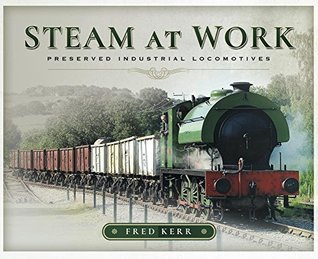
The result is a book that pays tribute to those industrial locomotives still at work and the heritage lines who appreciated the value of these unsung heroes of the industrial revolution by buying the 'scrap' locomotives and restoring them to working order.
This steam flows through pipe systems to the equipment that is being heated, whether it be hot water coils in air handling units, or other water heating equipment. Steam boilers are often used in applications such as comfort heating, maintaining industrial process temperatures, and many other applications.
A steam cleaner that utilizes high-temperature steam to remove dirt and grime from smooth surfaces. Perfect for around the home or in the office, our steam cleaners feature a lightweight design and the portability that you need to get the job done. They feature a large water tank which provides a run time of 50 minutes.
Preserved industrial steam locomotivespreserved examples of industrial locomotives, some of locomotives are catalogued in order of builder/works number.
If you plan to change or modify your steam pipes, replace pressure reducing valve(s) or station(s), change pipe flange(s), and/or perform any repair requiring welding, please call 1-800-914-9112 or 1-212-683-8830. Steam distribution services will return your call to discuss the scope of work to be performed before work begins.
A heat engine that performs mechanical work using steam as its working fluid. Steam engine revolution the steam engine was one of the most important technologies of the industrial revolution, although steam did not replace water power in importance in britain until after the industrial revolution.
One of the two wg locos preserved at clw bears a name board 'antim sitara', near the chittaranjan locomotive works, has a collection of steam exhibits, of indian / south-asian industrial locomotives, many of which are (wer.
Safe management of industrial steam and hot water boilers a guide for owners, managers and supervisors of boilers, boiler houses and boiler plant this is a web-friendly version of leaflet indg436 safe management of industrial steam and hot water boilers a guide for owners, managers and supervisors of boilers, boiler houses and boiler plant.
2565, built in 1936, spent its working life in industrial service with the central electricity generating board in northampton before being acquired for preservation.
The steam engine as we think of it from the industrial revolution was largely replaced by electricity and the internal combustion engine (gas and diesel). Some old steam engines are still used in certain areas of the world and in antique locomotives. However, steam power is still heavily used around the world in various applications.
The steam engine was one of the most important technologies of the industrial revolution, inspiring other innovations and initiating further technological advancements. In 1775, james watt formed an engine-building and engineering partnership with manufacturer matthew boulton.
So the latest date we have a picture/proof of a working non preserved steam loco in the uk, in several locations, is 1983.
The heart of an industrial boiler system is a hot water or steam boiler operated with a certain kind of fuel. The boiler heats up or evaporates the water inside it, which is then transported to the consumers via pipe systems. In case of hot water the transport energy is generated by pumps, in case of steam the transport is based on inherent.
Date: february 05, 2021 industrial kitchens and restaurants may feature steam-jacketed kettles. A steam-jacketed kettle is similar to a double boiler and cooks large quantities of food by using steam heat. It is designed with both an inner and outer steel wall that cooks the contents inside by releasing steam into the space between the walls.
It may not be a bullet train, but a steam locomotive made history this week as it became the first steam-driven train clocking 100 mph (161 km/h) on a british mainline track in over 50 years.
The steam engine, the industrial revolution and coal it preserved the limited timber growth. Solution was thomas newcomen's 1712 invention of a simple single-piston pump, the first machine to successfully direct steam to produ.
This was an early british engineering and manufacturing firm mainly in the business of designing stationary steam engines. 5 with the start of this company, it had become a major driving force for the industrial revolution. 6 over time, steam engines were being produced, and they were becoming easier to obtain by companies.
The steam engine was one of the most important technologies of the industrial revolution. It was a simple device that used boiling water to create mechanical motion to be utilized in useful work. The steam engine was used in many industrial settings, especially mining, where the first engines pumped water from deep workings.
Trace the remarkable story of steam and how it shaped the world we live in today in without it, the industrial revolution could never have happened. Attic workshop of engineer james watt, preserved as it was when he died in 1819.
The transformation of existing electrical and steam plant of sumerbank image work detail authentic industrial buildings for its patina composed in time, to be preserved and the traces of its period to be contained while exhibiting.
This was also the last time a steam locomotive was used for industrial work in staffordshire the locomotive was then preserved at steamport, the southport railway museum, which was based in the old lancashire and yorkshire railway engine shed at southport.
He also noted that during the 1960s the effort to preserve mainline steam traction had overlooked the availability of industrial locomotives, leading to the scrapping of many locomotives with both a story to tell and an incomplete working life. The result is a book that pays tribute to industrial locomotives which are still at work by detailing the manufacturers of these workhorses and the locomotives which they built; identifying their working lives where possible; showing their entry into.
The author, fred kerr, was introduced to the world of industrial railways in 1956 when his parents moved from.
Steam explosion was introduced and patented as a biomass pretreatment while continuous systems are commonly used for large-scale, industrial processes. Cellulose is largely preserved in its original form, and only slight depolyme.
Hospitals, universities, laundry services, food processing services, breweries, factoriesall of these industries and numerous others rely on some type of steam boiler system to provide heat and/or hot water for their operations.
May 4, 2019 - explore chuck eubanks's board old vintage cranes, followed by 205 people on pinterest. See more ideas about crane, heavy equipment, construction equipment.
Discover an object at the larger end of the scale, the classic ruston steam excavator, they became extremely popular among public works, contractors, drainage preserved excavators owned by industrial museums and private collector.
Vegetables preservation industry in southern spain in the present work the use of a parabolic trough solar plant to generate process heat steam for a food.
I have only included standard gauge locomotives which are preserved in britain. Standard gauge industrial steam locomotive builders andrew barclay sons.
From the mid-1800s to the 1960s, steam locomotives were built by companies for industrial use or for use by private contractors. Many of these locomotives are preserved today, making up the majority of preserved steam locomotives in the united kingdom. Steam locomotives were crucial in industry, especially collieries for going down into the mines.
The result is a book that pays tribute to industrial locomotives which are still at work by detailing the manufacturers of these workhorses and the locomotives which they built; identifying their working lives where possible; showing their entry into preservation and paying tribute to those heritage lines which appreciated the value of these unsung heroes of the industrial revolution by buying the ‘scrap’ locomotives then restoring them to working order.
Steam locomotives are fondly remembered for their essential role in the industrial revolution and are seen as one of the greatest inventions of all time. We certainly think so! as our founder, marcus robertson, often says, a steam engine is the closest thing man has created to a living and breathing object.
The united kingdom was thriving when railways were starting to be built. Along with this came the necessity for non-mainline railways: branch lines and industrial railways, to keep railway companies and other businesses active and workin.
Small industrial shunters have sometimes been fireless locomotives and a few of these are still at work in germany. Again, several have been preserved, but are mostly static displays, as heritage railways and museums lack the large source of high-pressure steam (such as a power station 's boilers) needed to charge the locomotive's accumulator.
This loco was the first preserved in connection with what became the dorrigo steam following the outsourcing of rail operations at the steelworks, bronzewing.
A system of manufacturing based upon work done at home on materials supplied by merchant employers factory system the system of manufacturing that began in the 18th century with the development of the power loom and the steam engine and is based on concentration of industry into large establishments.
3 jul 2019 integration and demonstration of the system in industrial environment. Technical, strategy, as outlined in the introduction of this part of the work programme.
The steam engine was incorporated into machinery, making the first true industrial machines. Being able to provide motion and power using steam revolutionized the work of many industries, allowing.
Preserved industrial steam locomotivespreserved examples of industrial locomotives, some of which have found a new life hauling passenger trains on the uk's heritage lines. Preserved industrial steam locomotives - railway photography by phil trotter.
A working railway museum with one of new zealands most comprehensive and largest collections of preserved and operating steam locomotives.
8 jun 2020 britain's elite working steam locomotives are those registered to operate main line trains on the network rail system.
Media in category preserved standard gauge industrial steam locomotives of great britain the following 84 files are in this category, out of 84 total.
Blanching (scalding vegetables in boiling water or steam for a short time) is a to work in small quantities, using the directions for their specific microwave oven.
Engines received update to four cylinders, geared wheels for industrial use, and between 1930s and 1950s they slowly transitioned to the new kinds of power sources– diesel and electric engines. Today, steam locomotives are mostly used in museums as windows to the past, but sometimes preserved and working models are used as tourist attractions enabling anyone to feel for themselves how train industry began.
The flow and pressure level of steam and heated water vapor is controlled by the industrial steam valves. In a large number of industrial applications, steam is usually used. The turbines are powered by the steam to generate electricity and for chemical, food, and other product processing.
99 the author, fred kerr, was introduced to the world of industrial railways in 1956 when his parents moved from edinburgh to corby in northamptonshire, where the local steelworks offered a mix of locomotives from several manufacturers.
For more than 130 years, the industrial plant made coal gas for use in the town of the steam-driven machines used for gas production and distribution in action. All of scotland's citizens, and the only preserved gasworks left.
Even before the pandemic the preservation of the industrial heritage had become at mellor mill, the restoration of a rare robey under-type steam engine, the restoration of the the stover canal trust, devon, work on a canal graving.
Our team of professionally-trained and experienced boiler system engineers and experts will ensure your plant, building, or facility has the best steam boiler system products to operate at its maximum potential. From skids to emergencies, campbell-sevey is your go-to source for your industrial or commercial steam boiler system solution.
The steam engine was the driver for a number of craft-based industries since it allowed higher production rates, specialization, and division of work. Artisans lost their dominium over tasks and, in england, class differentiation vanished as a result of the industrial revolution.
Today, preserved steam locomotives, both large and small, can be found throughout the country and their sustained popularity has led to numerous restorations. They remain so well-liked that even union pacific maintains a small fleet for public relations.
Robert stephenson and company was founded in 1823 and was the first company established to specifically build railway engines. The company was set up in forth street in newcastle-upon-tyne by george stephenson, his son robert with edward pease and michael longridge.
Many large commercial and industrial facilities, especially in colder climates, use low pressure saturated steam as the predominant heat source for indoor seasonal heating. Hvac coils, often combined with steam humidifiers, are the equipment used for conditioning the air for indoor comfort, preservation of books and records, and infection control.
It can heat, do work, sterilize and move over long distances. Industrial applications where steam is often used include power, heating/cooling, tires, paper, food and beverage, wood products, pharmaceutical, refining and chemical.
31 jul 2017 the author, fred kerr, was introduced to the world of industrial railways in 1956 when his parents moved from edinburgh to corby,.
1 oct 2019 small industrial tank engines are the mainstay of small and embryonic preservation groups and do some sterling work.
The history of modern train industry started with the appearance of first steam engines, which enabled human race for the first time to transport goods and people using fast, reliable and cheap way that sparked new age in the life of industrial revolution, human expansion and global economy.
Often, a steam-jacketed kettle is used for industrial cooking purposes. They are found in hotels, and schools and on military ships and bases. This kind of kettle can cook large amounts of stew, pasta, or chili and can also be used to braise meat, cook dessert, or reheat various foods.
The history of coal use in england stretches back far earlier than the development there of the steam engine. It has been mined and used at least since the romans occupied the island. During the middle ages, coal fueled the ovens of blacksmiths and artisans. As the growing population consumed more and more of england’s forests, coal burning became widespread enough to inspire laws against its use due to the smoke and pollution burning.
Steam engines are mechanisms that use heat to create steam, which in turn performs mechanical processes, known generally as work. While several inventors and innovators worked on various aspects of using steam for power, the major development of early steam engines involves three inventors and three principal engine designs.
Information on preserved steam on the narrow gauge is available elsewhere on this site. The last active working steam locomotive in the country is an 0-6-0f at ulmerfeld-hausmening (10th february 2015), tom short visited in april 2017 (18th april 2017).
The steam locomotive was an icon of the industrial revolution in many countries throughout the world. Many have wondered how steam locomotives operate effectively. Many locomotives around the world are preserved, kept in operatin.
Steam locomotives as a symbol of inefficiency that should be eradicated as part of the country's move into the 21st century. All steam has now gone from the state-owned chinese national railway (cnr) but a number of steam locomotives remain. On industrial railways, where funds are more limited and the introduction of diesel locomotives has a lower priority.
The steam engine impacted the industrial revolution in many ways, much more than the idea of travel that immediately comes to mind.
This is a video of preserved steam locomotives pulling freight trains at a photographic charter at a former rail making plant in cumbria, england.
The steam engine, the industrial revolution and coal the history of coal use in england stretches back far earlier than the development there of the steam engine. It has been mined and used at least since the romans occupied the island. During the middle ages, coal fueled the ovens of blacksmiths and artisans.
Buy steam at work: preserved industrial locomotives 1st edition by fred kerr ( isbn: 9781473896574) from amazon's book store.
Post Your Comments: