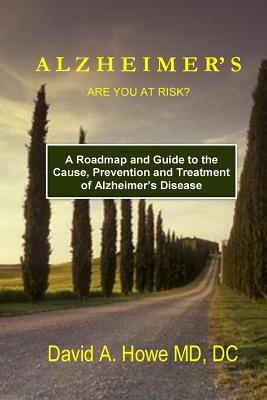
Download Alzheimer's, Are You At Risk?: A Roadmap and Guide to the Cause, Prevention, and Treatment of Alzheimer's Disease - David A. Howe file in PDF
Related searches:
The Truth About Aging and Dementia CDC
Alzheimer's, Are You At Risk?: A Roadmap and Guide to the Cause, Prevention, and Treatment of Alzheimer's Disease
The 4 A's of Alzheimer's Disease
Alzheimer - Dementia Warning Signs? - Early signs and diagnosis
Causes and Risk Factors of Alzheimer’s Disease
Alzheimer's disease - Symptoms and causes - Mayo Clinic
12 Early Signs of Alzheimer's - Common Signs and Symptoms
Dementia and coronavirus risk Alzheimer's Society
People With Alzheimer’s at High Risk of Falls and Injury
Are You at Risk for Alzheimer's Disease? Facts and Myths to
Should You Get the Genetic Test for Alzheimer’s Disease Risk
Smoking and Dementia: Are You at Risk for Alzheimer’s
Karma bites back: Hating on the elderly may put you at risk
Caffeine as a protective factor in dementia and Alzheimer's
How you can keep your mind sharp and beat dementia Daily
The Odds of Developing Alzheimer’s Disease Piedmont Healthcare
Can You Die From Dementia And How Does It Kill You?
The MIND diet: 10 foods that fight Alzheimer's (and 5 to
My Dad has Alzheimer’s Disease Is it Genetic? The Memory
If you have a history of alzheimer's in your family or if you have several family members over several generations who have suffered from the disease, consider talking to your doctor about the possibility of having genetic testing done and what other measures you might take to help keep your mind healthy and disease free.
This means that the older you are, the more risks you have to get the disease. The likelihood of developing the disease doubles every 5 years after the age of 65 (65 years old: only 3% risks, 75 years old: 12%, 85 years old: almost 50%).
About 1 in 10 adults will develop alzheimer’s by the age of 65; by age 85, that risk goes up to 50 percent. Carry one copy of the allele, and you have triple the likelihood to develop late-onset.
A quick test that tells if your loved one is at risk of alzheimer’s disease has been devised by doctors. The 21-question test distinguishes between normal absent-mindedness and the more sinister.
The symptoms are associated with physical and functional changes in the brain. Table of contents advertisement alzheimer dementia is a type of dementia.
Moreover, the children of a patient with early onset alzheimer's disease who has one of these gene mutations has a 50% risk of developing alzheimer's disease. Common forms of certain genes increase the risk of developing alzheimer's disease, but do not invariably cause alzheimer's disease.
Several studies have examined whether benadryl can cause dementia. So far, the research hasn’t proven that taking benadryl raises the risk of dementia. But the class of medications benadryl belongs to is linked to dementia. If you need to take benadryl, you can follow a few precautions to lower any potential risk.
Live a healthy lifestyle! subscribe to our free newsletters to receive latest health news and alerts to your email inbox.
Think you or a loved one might have alzheimer's disease? here's how to recognize the symptoms and get the help you need. Millions rely on helpguide for guidance and support during difficult times.
Most common late-onset alzheimer's gene the most common type of alzheimer's disease usually begins after age 65 (late-onset alzheimer's disease). The most common gene associated with late-onset alzheimer's disease is a risk gene called apolipoprotein e (apoe).
Forgetfulness and confusion can sometimes be early signs of alzheimer's. Get the facts on the disease's symptoms so you can discuss them with your doctor.
Medical research has yet to discover a cure for alzheimer’s that effectively slows the progression of this disease, although medications can help relieve some symptoms. Experts believe that age and genetic factors are 2 of the most important risk factors associated with alzheimer’s.
It’s no surprise that old age is the biggest influence on whether you get alzheimer’s, but you may raise an eyebrow over what can seem like an endless scroll of other potential risk factors for the deadly brain disease.
People who've had a severe head trauma have a greater risk of alzheimer's disease. Several large studies found that in people age 50 years or older who had a traumatic brain injury (tbi), the risk of dementia and alzheimer's disease increased. The risk increases in people with more-severe and multiple tbis.
Alzheimer’s disease is caused by the loss of neurons (nerve cells) in the brain. Other possible, but less common causes of dementia include parkinson’s disease, stroke, head injury, infection of the brain, substance abuse, nutritional deficiencies, and more.
For tea drinking, protective effects against cognitive decline/dementia are still less evident. In the caide study, coffee drinking of 3-5 cups per day at midlife was associated with a decreased risk of dementia/ad by about 65% at late-life. In conclusion, coffee drinking may be associated with a decreased risk of dementia/ad.
If you have a parent, brother or sister with alzheimer’s disease, you have a slightly increased risk of developing it yourself. There are also gene faults that can run in families and lead to early onset alzheimer’s disease.
For the most part, though, an increased risk doesn't mean a person will necessarily get the disease - just that the chances are higher. Here's what the science has to say about the factors that influence your risk of alzheimer's and cognitive decline.
Family history—researchers believe that genetics may play a role in developing alzheimer’s disease. Changes in the brain can begin years before the first symptoms appear. Researchers are studying whether education, diet, and environment play a role in developing alzheimer’s disease.
We may earn commission from links on this page, but we only recommend products we back. Why trust us? cognitive problems appear long before diagnosis.
Value the magnitude of the “epidemic” of alzheimer’s and late life dementias; explain that reduction of vascular risk is a promising way to reduce risk of experiencing alzheimer’s and late life dementia and that these conditions are among the most feared of any chronic disease.
Since genetic risk factors are not enough to cause late-onset alzheimer's disease, researchers are also studying education, diet, and other factors to see if they play a role in developing the disease. Resources: alzheimer's toolkit (information to help you understand and manage alzheimer's disease) expert articles on alzheimer's.
All these measures have been shown to reduce your risk for serious illness, including a lower risk of developing alzheimer’s disease. Fisher center for alzheimer’s research foundation at the rockefeller university.
The study, says its authors, is the first to suggest that a “culture-based risk factor predicts the development” of brain changes that are clearly linked to alzheimer’s disease.
Healthy lifestyle may reduce alzheimer's risk 02:04 doctors have been saying for years that what you eat can affect the health of your heart.
Risk factors for diseases like alzheimer’s (the most common cause of dementia) are hugely complex and include age, genetics and lifestyle. These three influencers don’t act alone either – they interact and are likely to vary in importance at different stages of your life.
The alzheimer’s research and prevention foundation is a leading global alzheimer’s disease (ad) prevention organization, funding some of the most significant integrative medicine research on alzheimer’s prevention� while providing educational outreach to laypeople, healthcare providers and caregivers on the 4 pillars of alzheimer’s prevention®.
Singing legend tony bennett’s family has revealed that he was diagnosed with alzheimer’s disease in 2016. Aarp magazine reports that the 94-year-old is still singing daily and has a new album due with lady gaga, recorded as the disease prog.
People with alzheimer's and their family members can often feel isolated and are at risk for depression. Connecting with others through support groups can allow people to share specific situations and suggestions, and learn how others cope with the challenges of alzheimer's�.
Would you like reduce your risk of cognitive impairment, alzheimer’s disease, and dementia? researchers from around the world having been studying a variety of different factors that might reduce these risks and keep the brain healthy.
The biggest advance toward the early prediction of alzheimer's, hartley says, is using pet scans to show the buildup of beta amyloid plaques in the brain.
Where you live could affect your chances of developing dementia new research suggests neighborhood-level factors could affect the risk of developing alzheimer’s or other dementias.
A new study analyzed the impact of socioeconomic conditions on rates of alzheimer’s. Black and latinx patients are more likely than white patients to develop alzheimer’s.
With an alzheimer's disease diagnosis, the questions will probably follow as you struggle to come to terms with this disease. Understanding alzheimer treatment options will be crucial so you can make decisions about care.
Other genes can make you more likely to develop certain diseases, including alzheimer's disease. Researchers have identified a number of genes associated with alzheimer's disease. However, genetic risk factors are just one of the factors involved in getting alzheimer's disease.
According to a report released by the world health organization (who) earlier this year, people can reduce the risk of cognitive decline, dementia and alzheimer’s. While genetics play a part in alzheimer’s, let’s look at the non-genetic risk factors that can contribute to the ailment.
As with apoe, these genes are risk factors, not direct causes. In other words, having a variation of one of these genes may increase your risk of alzheimer's.
As alzheimer's disease gets worse, the person may have trouble walking and keeping his or her balance. He or she also may have changes in depth perception, which is the ability to understand distances. For example, someone with alzheimer's may try to step down when walking from a carpeted to a tile floor.
Researchers are linking a diet rich in red meat, added sugars and refined carbohydrates to a higher risk of alzheimer’s disease. So while there might not be a quick fix to preventing alzheimer’s disease, you can raise or reduce your risk of developing the disease at each meal.
An expert discusses the latest research and what to do if you have concerns about your dementia risk and medications. Share this article via email with one or more people using the form below.
Should you get the genetic test for alzheimer’s disease risk? experts believe that apoe4 is a strong genetic marker for late-onset alzheimer’s disease, the most common form of dementia.
The age at which hrt is started, however, may affect the outcome. Hrt (prescribed mainly to help with symptoms of the menopause) is not recommended as a way for women to help reduce their risk of dementia. For most dementias other than alzheimer’s disease, men and women have much the same risk.
Problems with vision, perception and balance increase as alzheimer’s advances, making the risk of a fall more likely. A study from the medical journal age and ageing found that seniors with alzheimer’s are three times more likely to suffer from hip fractures than those without the disease.
Vascular dementia can make it difficult for you to process information. Although it’s a common post-stroke problem, not everyone who has a stroke is at risk for vascular dementia.
You can learn more about alzheimer’s disease, other types of dementia, and access resources for caregivers at alzheimer’s disease and healthy aging. Racial and ethnic estimates of alzheimer’s disease and related dementias in the united states (2015-2060) in adults aged ≥65 years.
Post Your Comments: