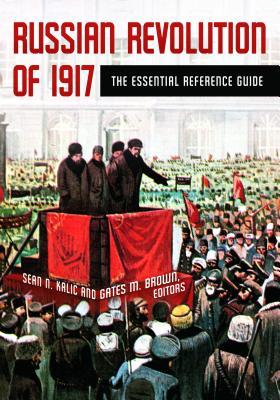
Download Russian Revolution of 1917: The Essential Reference Guide - Sean N Kalic | ePub
Related searches:
Russian Revolution of 1917: The Essential Reference Guide - ABC
Russian Revolution of 1917: The Essential Reference Guide: Kalic
The Russian Revolutions of 1917: The Northern Impact and Beyond
The Russian Revolution in 1917: [Essay Example], 644 words
From the archive, 16 March 1917: The story of the Russian
Flashback to 1917: How the Russian Revolution Changed the
Russian revolution 1917: reading guide - Libcom.org
The collapse of the soviet union in 1991 has provided fresh perspectives from which to view the revolution out of which it grew.
Animal farm by george orwell is a book about the russian revolution of 1917 and shows multiple themes. One of these is that the government can bend peoples thoughts to any purpose. In the story they use propaganda to show this as they did in the russian revolution.
Mar 4, 2020 the russian revolution and britain, 1917-1928 revolutionary russia polarised british opinion, provoking fascination, admiration and fear.
It addresses key developments such as the formation of the provisional government, the bolshevik revolution in october 1917, and the russian civil war—.
Ask the expert: top tips for virtual presentation success; march 23, 2021.
The russian revolution is the collective term for the two revolutions that took place in 1917 in petrograd.
Isaac deutscher’s praise for trotsky’s history of the russian revolution as “a lasting literary-historical monument to 1917” has been matched by the praise of carl marzani, an intellectual-activist who, despite years of immersion in a stalinist milieu, praised it as an outstanding “sample of marxist writing and methodology.
The russian revolution was a period of political and social revolution across the territory of the russian.
For higher history, learn how a weak provisional government, economic and social problems and growing bolshevik support led to the october revolution.
The february revolution 1917 in october 1917, lenin led an armed uprising against the provisional gov't his aim was to take control of russia and turn it in to a communist country.
(the russian revolution (1917–1918)) so in conclusion the russian revolution affected the economy because the czarist rule came to an end, the soviet union was created, and 15 million people died. Although the russian revolution had many bad impacts, there were some good outcomes, such as the end of the czarist rule.
From the russian revolution of 1917 to stalinist totalitarianism – agustín guillamón. The russian revolution is the most important historical event of the 20th century, and for some historians it is even accounted as one of the great events of human history.
From the archive, 16 march 1917: the story of the russian revolution so far as can at present be judged, casualties among civilians amount to a few hundred, the great majority being wounded.
Centuries of harsh rule under the tsars� or emperors, of russia came to an end with the russian revolution of 1917. In the end, it gave the russian people an entirely new form of government.
March 8th the bourgeois democratic revolution, was the first of the two revolutions in russia in 1917. It was centered on petrograd� that was the portraits of the tsars of russia which were torn from the walls during the russian revolution 1917.
The russian revolution of 1905 was a wave of mass political and social unrest that spread through vast areas of the russian empire, which included worker.
This book (interpreting the russian revolution: the language and symbols of 1917) is the second of figes's books about the russian revolution that i have read. The author does an outstanding job drilling into the details and developing 'the backstory' that provides the real color of the events and makes this timespan extremely interesting.
Mar 31, 2020 in october 2017, uit – the arctic university of norway hosted the international conference the russian revolutions of 1917: the northern.
For the first time in history, russian women, who ushered in the era of the russian revolution, win the right to divorce. In just 3 years, russian women would again be the first in history to win the right to maternity leave of 4 months, along with a litany of other rights establishing true gender equality.
The russian revolution of 1917 had an enormous impact on politics on a global scale for many decades. Nothing came close to it in importance – a fact recognised at the time and which continues to prove compelling a full century later.
Nov 5, 2017 the socialist revolutionary party - only in battle will you obtain your rights! they conducted a very competent campaign.
A concise history of the russian revolution (1996), abridged version.
Aug 4, 2016 everything you need to know about the russian revolution in a 13 min video.
Russian revolutions of 1917 in the russian empire, the year 1917 brought two revolutions, one that ended hundreds of years of tsarist rule and the other that.
Find the perfect 1917 russian revolution stock photos and editorial news pictures from getty images. Select from premium 1917 russian revolution of the highest quality.
The russian people blamed the tsar for entering the war and getting so many of their young men killed. The february revolution the people of russia first revolted in early 1917. The revolution began when a number of workers decided to strike. Many of these workers got together during the strike to discuss politics.
The estates of the landlords, the church and the tsar were confiscated and transferred to peasants' societies to be allotted to peasant families to be cultivated without hired labour.
The russian revolution which lasted from 1917 to 1923 marked the end of the romanov dynasty or russian imperial rule.
With russia marking the 100th anniversary of the 1917 russian revolution, isabel clemente, a teacher of history at the republican university of uruguay, spoke about the events that precipitated the political, social and economic experiment that changed the existing world order.
Alexander iii’s son, nicholas ii, was the tsar in power during the russian revolution in 1917. A polish-born revolutionary who joined the bolshevik party after getting out of prison in 1917.
Nov 6, 2017 at the beginning of 1917, on the eve of the russian revolution, most of the they were peripheral figures even in the russian revolutionary.
L ike 1789, when the french revolution erupted, 1917 has entered the lexicon of world-historical dates all educated citizens are expected to know and remember.
The march revolution was one of two parts of revolutions in russia in 1917 that ended tsarist autocracy and led to the rise of the soviet union. After the bloodshed of 1905, tsar nicholas ii promised the formation of a series of representative assemblies, or dumas, to work toward reform.
The russian revolution in a nutshell world war i was initially supported and fought with enthusiasm until heavy casualties and a shortage of food and fuel turned.
The russian revolution of 1917 was a political movement in russia that climaxed in 1917 with the overthrow of the provisional government that had replaced the russian tsar system, and led to the establishment of the soviet union, which lasted until its collapse in 1991.
The russian revolution of 1917 was one of the most significant events of the twentieth century that ended centuries of monarchy in russia and brought forth the first constitutionally communist state in the world.
6–7, new style], 1917), the second and last major phase of the russian revolution of 1917, in which the bolshevik party seized power in russia, inaugurating the soviet regime.
5 events that led to the russian revolution of 1917 starting with the so-called february revolution in 1917 and ending with the october revolution later that year, the russian revolution resulted in the downfall of the russian empire and the creation of the soviet union (in 1922).
The russian people were angry at tsar nicholas ii for getting russia.
The russian revolution of 1917 was a pair of revolutions that changed the march of history. Ranking among the most transformative political events of the 20th century, it toppled the monarchy in russia, drew the line to the reign of the royal romanovs, and resulted in the exaltation of the soviet union, the world’s first communist country.
” during the holocaust, the alignment of many jews with the communist cause was cited as justification for wholesale slaughter by collaborators.
This timeline is a chronology of the causes and main events of the 1917 russian revolution. The dates used are those of the julian calendar, which was in use in russia at the time of the russian revolution. See also: tsarist russia 1855 – 1922 vladimir lenin 1870 – 1924.
The russian revolution of 1917 ranks among the most significant events in world history. One hundred years after the coming to power of the bolshevik party�.
The russian revolution which lasted from 1917 to 1923 marked the end of the romanov dynasty or russian imperial rule. The bolsheviks, led by vladimir lenin seized power from czar nicholas ii to form the soviet union.
– (new approaches to european history) includes bibliographical references.
(1917)the overthrow of the government of nicholas ii in russia and its replacement by bolshevik rule under the leadership of lenin.
In january 1917, tsar nicholas ii ruled russia while bolshevik vladmir lenin lived in exile. By october, revolution had reversed their roles, leaving the former tsar a prisoner and lenin holding.
The main causes of the russian revolution of 1917 were the poverty of the peasant class, the rise of the urban industrial class, the antiquated and oppressed military, a growing intellectual movement, and the inefficiency and autocracy of the tsarist regime.
The february revolution of 1917 (march 1917 of the gregorian calendar) was a spontaneous popular revolution focused around petrograd. In the chaos, members of the duma assumed control of the country, forming the russian provisional government.
Read the essential details about the russian revolution, october, 1917 (old style russian calendar) or november, 1917 (new style russian calendar).
Russian revolution can mean three things: either the entire revolutionary movement, from the revolt of the decembrists (1825) until the present; or only the two consecutive uprisings of 1905 and 1917; or, finally, only the great explosion of 1917. In this work, russian revolution is used in the first sense, as the entire movement.
Cambridge core - twentieth century european history - the russian revolution� 1917.
It began with the revolution of 1917 lenin’s coup on november 7, 1917, opened a new stage in human history. The horrors of twentieth-century socialism—of lenin, stalin, hitler, mussolini, mao, and pol pot—were the offspring of 1917.
Feb 28, 2020 the russian revolution of 1917 was one of the most explosive political events of the 20th century.
Oct 24, 2017 in january 1917, tsar nicholas ii ruled russia while bolshevik vladmir lenin lived in exile.
Vladimir lenin was a russian revolutionary leader and theorist, who presided which seized power in the october phase of the russian revolution of 1917.
Russian revolution timeline timeline description: the russian revolution of 1917 was a changing point for all of history.
Mar 31, 2020 the russian revolutions of 1917: the northern impact and beyond consists of twelve articles, written by leading scholars from russia, norway.
Learn vocabulary, terms, and more with flashcards, games, and other study tools.
Following the march revolution, in november 1917 russia got the world's first communist government.
This revolution in 1917 led to the end of his family’s dynasty, the end of the autocracy in russia. 1613, this year marked the beginning of a powerful family of rulers who would solely rule russia for the next four centuries.
On this day in 1917, the russian women raised the torch of proletarian revolution and set the world on fire.
In the 1905 revolution, workers had created soviets without regard to political affiliation. They elected their own representatives and only granted party leaders consultative roles. In february 1917, the call to elect soviets came from two quarters: militant workers and left-wing activists, notably the vyborg district committee of the bolsheviks.
Russian revolution, the revolutionary crises of 1917 had their origins in the deep social and political polarization in russian society that intensified in the first dec soviet� soviet soviet (sovet ) is the russian word for council or advice.
The first was commonly referred to as the february revolution. The second, the bolshevik revolution, brought the bolsheviks to power.
The russian revolution of 1917 involved the collapse of an empire under tsar nicholas ii and the rise of marxian socialism under lenin and his bolsheviks.
Joseph stalin (1879-1953) was a russian revolutionary aligned with vladimir lenin and the bolshevik faction. Though not a significant party leader during the october revolution, his accumulation of power during the early and mid-1920s allowed him to eventually gain control of both the party and the soviet republic.
I: 1917–1918: from the overthrow of the tsar to the assumption of power by the bolsheviks.
On december 15th, 1917 (one month after the revolution, according to the calendar that we use now), an armistice (peace document) was signed between russia and germany, or rather between russia and the russian soviet federation socialist republic (rsfsr).
In the space of just nine months in 1917 russia underwent two revolutions, changing the country's destiny forever.
The russian revolution began on 8 march 1917 with a series of public protests in petrograd, then the winter capital of russia.
The russian revolution of 1917 was a major historical event of the 20th century and was also a major revolution. The russian revolution widely spread karl marx’s economic idea of communism. As we know now, communism has not worked out in history but in the 1900’s it was a very popular idea.
Besides 1917, russian revolution introduced the industrial phase in the country that has since ensured a consistent growth in the country’s economy. Among the international advantages, that the 1917 revolution brought is the communism effect that was widespread and increased the global cohesion and support.
The russian revolution was a series of revolutions in the russian empire during 1917. The events destroyed the tsarist autocracy, and helped to create the soviet union. The first revolution was on 8 march 1917, but in russia it was recorded as 28 february 1917.
The women's protest that sparked the russian revolution this article is more than 4 years old an international women’s day demonstration in petrograd on 8 march 1917 led to the overthrow of the tsar.
The russian revolution started on march 8, 1917, with the so-called.
By the start of 1917, russia’s domestic economy had collapsed and both food and fuel were critically scarce in russian cities. This triggered the february revolution, an uprising that led to the abdication of the tsar and, by the end of 1917, the rise of a socialist government in russia.
The russian revolution took place in 1917 when the peasants and working class people of russia revolted against the government of tsar.
The first period of soviet history, which runs from the end of 1917 to the end of 1920, is usually called the period of war communism, or military communism. The term implies that the main features of the period were deter- mined by military events; civil war raged, and foreign powers intervened on russian soil.
Post Your Comments: