Read Arabs and Iranians in the Islamic Conquest Narrative: Memory and Identity Construction in Islamic Historiography, 750-1050 - Scott Savran file in PDF
Related searches:
Arabs and Iranians in the Islamic Conquest Narrative - Routledge
Arabs and Iranians in the Islamic Conquest Narrative: Memory and Identity Construction in Islamic Historiography, 750-1050
Arabs and Iranians in the Islamic Conquest Narrative - Amazon.com
Arabs and Iranians in the Islamic Conquest - ResearchGate
“Arabs” and “Iranians”: The Uses of Ethnicity in the Early - Brill
Arabs and Persians beyond the Geopolitics of the Gulf
Amazon.com: Arabs and Iranians in the Islamic Conquest
Culture and Civilization in the Middle East Ser.: Arabs and
The Evolving Nexus between Islam and Iran By, Niloufar 'Lily
The Arab World and Iran - A Turbulent Region in Transition Amin
The Encounter with the Islamic Past: Turks, Arabs and Persians
Iran and Islam The Iran Primer
The Rise and Fall of Iran in Arab and Muslim Public Opinion
Bridging the Divide between Iran and the Arabian Peninsula
Mismatched Expectations: Iran and the Muslim Brotherhood After the
The Arabs, Byzantium and Iran: Studies in Early Islamic
Iranian Identity, the 'Aryan Race,' and Jake Gyllenhaal
Muslims and Islam: Key findings in the U.S. and around the
The Islamic Movement and Iranian Intelligence Activities in
Astronomy and Astrology in the Medieval Islamic World Essay
ʿARAB i. Arabs and Iran (pre-Islamic) – Encyclopaedia Iranica
MYTH vs. FACT: Persians and Arabs — American Iranian Council
Do many ethnic Persians in Iran secretly hate Arabs and Islam
Persians Are Not Arabs (We Explain the Difference) • PANA
Are Arabs and Iranians white? Census says yes, but many disagree
The Islamic Attack on Iranian Culture - SAGE Journals
Arabs, Iranians, and Turks vs. Balkan Muslims :: Center for
The Difference: Persians vs Arabs; Iranians vs Semites
The Arab Conquest of Persia IranVisitor - Travel Guide To Iran
Strait of Hormuz - Religion in Iran - The Strauss Center
Why Saudi Arabia and Iran are bitter rivals - BBC News
Iran, Islam and Arabs : iranian - reddit
The Iranian policy in the Middle East: evolution - Emerald Insight
Opinion: Iranians move into front line of the Middle East's quest for
The Arabs' Forlorn Envy of Iranians - Tehran Bureau FRONTLINE
How to Recapture the Muslim World's Lost Hope - The Atlantic
Middle-East-Info.org - Arab, Iranian and Muslim Freedom
The Islamic Awakening: Iran’s Grand Narrative of the Arab
Are Iranians People of Color? Persian, Muslim, and Model
Arab Conquests and Sasanian Iran History Today
Iranian nuclear program effectively plays into enhancing the image of a powerful and independent islamic state. Contrary to what is commonly assumed, however, iran’s narrative of the islamic awakening and its promotion of islamic government are not tied to an iranian state model—or to any other specific institutional model, for that matter.
Conquest of most of iran turned out to be permanent, islam eventually spread among iranians, and arabic became the language of religion, literature, and science in iran. In this respect the muslim arab conquest marks a major turning point in the history of iran.
Arabian muslims founded a caliphate (islamic rule area) and subsequently defeated the sassanid empire in the iranian plateau. Persians eventually managed to throw out arab invaders but during the period where they were under arab domination, persian generally converted to the muslim faith.
9 feb 2019 the islamic republic represents a danger, but it's also a convenient excuse for the region's rulers.
The contemporary shiite revival has given iran influence in the muslim world and especially among other shiite communities in the arab world and south asia, challenging the sunni secular nationalists and traditional monarchies.
In her studies of arab and iranian responses to the islamic conquests. Professor crone has also been attentive to the ways in which the set of persons.
Iran worked with the iomb’s london office to organize interfaith dialogues between sunni and shia muslims. This included the iran-backed islamic unity forum, established in 2007 with cooperation from ibrahim munir, the secretary general of the iomb. Such events also allowed iran to develop and sustain contacts with members of the egyptian.
2 nov 2016 most persians, including most iranians, practice shiite islam. [12] shiites make up a small minority, about 10%, of muslims worldwide.
The trend puts a dent in the efforts of iran as well as its rivals, saudi arabia, turkey, and the united arab emirates, that are competing for religious soft power and leadership of the muslim.
In a survey, 58% of iranians said they do not believe in the hijab altogether — while around 72% opposed the compulsory hijab few topics are as delicate as religion — especially in the middle east.
Since the islamic revolution in late 1970s, its goals and interests are in conflict with those of the arab countries, in general, and egypt, in particular, a matter that.
[i] by contrast, most arab states in the middle east are predominantly sunni. The rift between shi'is and sunnis occurred early in islamic history when the muslim.
Most iranians are shi'ite muslims, including the iranian arabs.
24 jun 2009 others in the arab world see the iranian islamic revolution as a nasty export commodity that only spells trouble for arab societies.
Iranians remained zorastrian for 300 years because that’s how long it took for the invading arabs’ jizya and land tax system to “force” most city dwelling iranians to adopt islam and arabic language to survive in the then arab dominated lands of iran.
Islamic beliefs were strongly influenced by non-orthodox syriac and other christian cults in the syro-mesopotamian region. The arabs of mecca were aware of conflicts in yemen between the sasanians and the axumites, an empire ruling over ethiopia. They also knew about the byzantines’ withdrawal from syria and egypt.
30 aug 2018 those iranians, who did not want to convert to islam and pay taxes to the foreign aggressors had to flee from their homelands.
25 jan 2020 the question haunts us in the arab and muslim world. You will hear it from iran to syria, from saudi arabia to pakistan,.
The second examines the role of islam, islamism, islamic governance, and sectarian and ethnic politics in the region.
11 mar 2019 relations between iran and its gulf arab neighbors are at their lowest point since the 1979 islamic revolution, with little interaction between.
The growth and regional migration of muslims, combined with the ongoing impact of the islamic state (also known as isis or isil) and other extremist groups that commit acts of violence in the name of islam, have brought muslims and the islamic faith to the forefront of the political debate in many countries.
After fourteen centuries, persians and non-persian iranians have remained muslim at will, and their political activism has been in the main islamic. The revolutionary overthrow of the secular regime of the shah and the creation of the islamic republic of iran is the most recent conspicuous example.
The reference book says the term historically included the “nomadic semitic inhabitants of the arabian peninsula” and in modern usage encompasses the arabic-speaking people stretching from mauritania to southwestern iran. With the exception of various minority ethnic groups in iran (one of which is arab), iranians are persian.
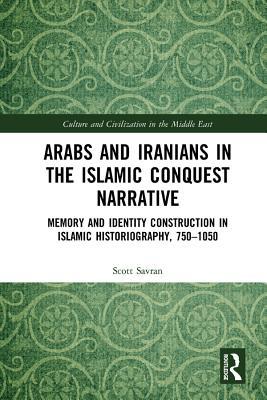
Arabs and iranians in the islamic conquest narrative analyzes how early muslim historians merged the pre-islamic histories of the arab and iranian peoples.
4 feb 2021 recent surveys indicate strongly that across the middle east and iran, officially, arab states have major muslim populations, varying from.
Org – the same arab and iranian dictators oppress their fellow subjects, sponsor terrorism and imperil israel, the sole democracy in the middle east. 360 million oppressed people in arab states and iran are entitled to the same freedom and prosperity enjoyed by europeans, americans and israelis.
“islam, religion of peace” and the “moderate muslims” are garbage terms created in washington dc by the american liberals, islamist apologists and the iri (islamic republic of iran) lobbyists.
As two of the most prominent ethnic elements in the middle east, arabs and iranians have been in contact.
Arabs and iranians in the islamic conquest narrative analyzes how early muslim historians merged the pre-islamic histories of the arab and iranian peoples into a didactic narrative culminating with the arab conquest of iran.
Omar's command led to the destruction of many a fine library in the territories of the persian and the byzantine empires that the arabs had conquered.
Arab is an ethno-linguistic category, identifying people who speak the arabic language as their mother tongue (or, in the case of immigrants, for example, whose parents or grandparents spoke arabic as their native language). Arabic is a semitic language, closely related to hebrew and aramaic.
) of the iranian population identify as muslim – the majority being shi’a (also known as shi’ite) muslims. 1 iran is the only muslim country to declare itself officially shi’ite. A minority of around 5-10% of the population identify as sunni muslims.
Although iran is a multiethnic nation of persians, azeri turks, kurds, baluchis, arabs, armenians, and many other groups, iranians were taught to pride themselves for their aryan blood and white skin and to look down on the supposedly “stupid” turks and “backward” arabs.
Iran-aligned yemeni rebels meanwhile have stepped up drone attacks on the kingdom—one of which resulted in the temporary shutdown of a major oil pipeline. Saudi arabia, a staunch us ally, geared up to host leaders from across the arab and muslim world for emergency gulf and arab summits and a meeting of the heads of state of islamic nations.
The encounter with the islamic past: turks, arabs and persians. Authors “oh! said the veiled woman,” “thanks be to god, we are turkish and muslim.
Arab islamists gained greater room for maneuver in macedonia, which left yugoslavia in 1991, and where muslims form a large minority, consisting mainly of ethnic albanians. There, the islamic clerical structure was soon under tight arab control. The story of that extremist exploit is complicated, but it is a visible reality.
Mismatched expectations: iran and the muslim brotherhood after the arab uprisings.
Umayyad caliphs; the abbasids; golden age of islam; previous next.
The beduin arabs who toppled the sassanid empire were propelled not only by a desire for conquest but also by a new religion, islam.
Since the islamic revolution in 1979, iran has promoted “khomeinism”[1] as one of its foreign policy tools in the muslim world. Despite nigeria’s geographic and cultural distance from iran, there is no region outside of the middle east where iran’s ideology has a greater impact than in northern nigeria. Nigeria’s pro-iranian shi`a muslim community was continued.
Most arabs and muslims now hold decidedly negative views of iran and are solidly opposed to iran's regional ambitions. The same is true of arab and muslim attitudes toward iran's nuclear program. Back in 2006, when iran was seen as the bastion of resistance to the west, their nuclear ambitions were supported and defended by majorities in most.
The new shah also owed his political survival to a 1953 coup engineered by the united states. Iran's islamic revolution: lessons for the arab spring of 2011?.
From pre-islamic times one can cite the conflicts between the persians and their western neighbours, the mesopotamians and medes: during the iran-iraq war iraqi.
The arab expedition to iran began before the muslim conquests and continued with joint exertions of the civilized arabs (ahl al-madar) and desert arabs (ahl.
14 feb 2019 conflict between shia and sunni muslims, placing tehran and riyadh on opposing sides, was not one of revolutionary iran's regional.
Islam was brought to iran via arab-islamic conquest in 650 ad and has played a shifting, anomalous role in this nation-state ever since.
In fact, the arabs of the umayyad era classed the iranians as racially “red,” lighter-skinned and lighter-haired people than the arabs, and subjected the converts to islam among such people (called “mawali” or clients) to institutional discrimination on a racial basis (despite the shared religious affiliation with the conqueror).
However, there have been a lot of tensions between arabs and iranians such as the islamic conquest of iran and several political issues associated with pan-arabism and arab nationalism including the persian gulf naming dispute. Another thing, is that arabs have been called “lizard eaters” in iran.
Of the arabs in the 7th century (only the example of the tribesmen of arabia form the bulk of the muslim armies.
28 mar 2019 arab and iranian communities for years have lobbied the bureau to from iran in 1964, more than a decade before the islamic revolution.
The 2003 us-led invasion of iraq overthrew saddam hussein, a sunni arab who had been a major iranian adversary.
Most persians, including most iranians, practice shiite islam. Shiites make up a small minority, about 10%, of muslims worldwide. When prophet mohammad, the original leader of islam, died in 632, shiites believed the true descendant to his spiritual authority should be his cousin and son-in-law, ali ibn abi talib.
Post Your Comments: